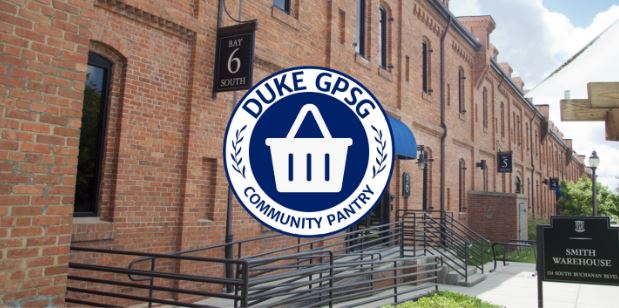
Over the past few years, the GPSG Community Pantry has become a thriving resource for graduate and professional students, providing reliable access to nutritious food. Serving around 200 students each open day, the pantry provides everything from shelf stable items to fresh produce. During the academic year, it’s open every Friday from 11am to 6pm and currently runs out of Smith Warehouse, Bay 6 South.
I had the chance to speak with Nicholas Hart and Sarah Levine to learn more about the behind-the-scenes operations. Nicholas, as the Hunger Corps AmeriCorps VISTA, and Sarah, as the Assistant Director for Graduate and Professional Student Services, both play key roles in managing and advising the pantry. They are committed to making the pantry a more sustainable resource, which, for them, means intentional integration into the university’s structure. Questions like, “How do we make sure that the pantry continues? Are we building systems where, when we have turnover in leadership, the next group that comes in is ready and can continue the pantry’s functionality?” are central to their work.
One way they aim to better integrate the pantry into the university community is by increasing the number of students who use it as a resource. They do this by actively responding to student feedback. When students requested fresh produce, they set up a partnership with Duke Campus Farms, which now provides regular donations. This summer, they piloted a spice program to identify which spices are most in demand. They are also working to make the pantry more inclusive by accommodating specific dietary needs, including Halal and Kosher. In addition to the food offered, they’ve responded to student input by reevaluating the pantry’s location, hours, and days of operation.
Their student-first mentality closely aligns with their newest initiative: transforming the pantry into a social space. Nicholas highlights the pantry’s role in fostering connection. “I’ve seen a lot of people who were strangers a couple of months ago become friends now. It’s kind of insane to see, but we’re not surprised. We see it as food bringing people together.” Embracing the pantry as a social space includes bringing in additional resources, such as the Career Center and the Dean of Students. Nicholas explains that, ultimately, it’s about “making intentional choices to help students feel safe, to feel like they’re a part of something, to ensure that they don’t feel alone. I think food insecurity can definitely make people feel alone, and so we try to emphasize unity. Even if that’s just being together in the times that the pantry is open.”
Despite their ambitions to expand reach, a hard truth persists: “Money makes the world go round,” Sarah admits. Slightly less than half of the pantry’s budget comes from the Graduate Student Organization funding pool; the remainder must be raised through donations. To meet their financial needs, the pantry receives support from multiple donors including The Graduate School and other members of the Duke community. Without the support from TGS and other academic programs, the Pantry’s budget could not meet the needs of their patrons. At the same time, they’re conducting a thorough cost evaluation to better understand their operating expenses. “Are we shopping at the most effective places? Are we getting our resources from the most sustainable opportunities?” Sarah asks. She emphasizes that having these conversations now will ensure they’ll be ready to clearly articulate their needs and justify their fundraising goals when the time comes.
As they continue to consider their budget and think about long-term sustainability, Sarah underscores the need to stay adaptable. “To be sustainable, flexibility is essential. We have to be willing to experiment, be open to new ideas, but also not be afraid of change.” As the pantry continues to optimize its operations, drawing inspiration from NC State and NC Central’s food banks and receiving patron input, it hopes to build such sustainable practices. “We can build practices, but it’s flexibility in those practices that ensures sustainability. That’s what’s going to make them thrive a bit more and change as times change.”
~written by Anna Brown, Duke SAS intern